— BFD Law Office · Financial Activity Security

Tax disputes & business defense

Additional assessments, field audits, business fragmentation, secondary and criminal liability. From the inspectorate's first demand to the Supreme Court of Russia — with a written assessment and a frank discussion of prospects at the outset.

First assessment — in writing, before any engagement.

100+
publications and presentations in tax law
25+
years of combined tax-law experience
15+
industries and business sectors in the firm's tax practice
10+
jurisdictions in the partner network — BRICS, CIS, Middle East, EU

— Practice

Practice areas

Three areas where the firm handles most of its matters. Beyond tax, we work at the intersection with corporate, contract, insolvency and antitrust law and intellectual property — which lets us run a dispute or a deal as a whole, not in pieces.

Area 01

Tax disputes and audits

We reduce assessments and, where possible, close the dispute with the tax authority before trial; we carry the case through to cassation and, if needed, to the Supreme and Constitutional Courts.

  • Support during field and desk audits of the Federal Tax Service
  • Objections to the audit report, administrative appeals, representation in arbitrazh courts
  • Disputes under Article 54.1 of the Russian Tax Code and business-fragmentation cases
  • Criminal defense under Articles 198–199 of the Russian Criminal Code
Area 02

International taxation

CFC, BEPS, transfer pricing, double taxation, exchange of tax information, currency regulation.

  • CFC reporting, profit calculation, transition to the fixed-profit regime
  • Application of double tax treaties, the beneficial-owner test
  • Scholarly legal opinions in disputes with the tax authority
  • Structuring settlements under sanctions and shifting business purposes
Area 03

Structuring and risk analysis

Tax planning of transactions and risk assessment of existing structures.

  • Tax support for M&A and reorganization of holding structures
  • Tax Due Diligence for investment and acquisition targets
  • Tax review of contracts — we remove wording that gives the inspectorate grounds for assessments
  • Exit from fragmentation arrangements, voluntary disclosure

— Industries

Industry experience

The industries where we have resolved the most matters. We know the typical audit risks and the internal logic of each sector.

Metallurgy

Excise on liquid steel and the mineral-extraction tax on ore and coal are computed from export indices, not from cost. Disputes over the excise base and casting volume (the 1,000-tonne threshold), the price floor that zeroes out the excise, the KRENTA coefficient and payment deferrals (Government Decree No. 1683).

Do you disagree with the inspectorate on how the liquid-steel excise base or the volume of recorded semi-products is determined? Start with a review of your casting records and the price indicator you apply.

Machine-building

Separate accounting and pricing under the state defense order, SPIC tax guarantees, the enhanced R&D coefficient (Art. 262 of the Tax Code) and the investment tax deduction. Disputes over eligibility for incentives and the classification of development costs.

Is the inspectorate challenging your state-defense-order accounting or your R&D coefficient? Start by reconciling your accounting policy with the list of works under Art. 262 of the Tax Code.

Construction and development

Timing of recognition and calculation of savings on shareholders' funds — per contract or per project as a whole (a dispute that reached the Supreme Court), developer profit tax and VAT under escrow, taxation of serviced apartments, classification of sub-contractor chains.

Is the inspectorate assessing profit on escrow savings computed per individual shareholder? Accounting for the financial result across the project as a whole is arguable — start with an analysis of the savings calculation.

Trade and distribution

Inclusion of royalties and dividends in the customs value (Supreme Court practice), customs-value adjustments, currency control and parallel imports, VAT and agency arrangements on marketplaces.

Is customs adding royalties or dividends to the customs value and assessing extra duties? Start with an analysis of the licensing and dividend structure of your transactions.

IT and digital companies

Keeping the share of core revenue at or above 70% (cl. 1.15, Art. 284 of the Tax Code) and separate accounting, the risk of a retrospective full-year tax recalculation when dividends or non-core income arise, the VAT exemption available only for software in the Ministry of Digital Development register. Field audits of IT companies are possible again from 2025.

Could dividends or non-core revenue push your core share below 70% and trigger a full-year recalculation? Start with a review of your income mix and separate accounting.

Private capital and holdings

CFC notifications and profit calculation, the fixed-profit regime, determining tax residency, incentives for international holding companies in Special Administrative Regions (Russky and Oktyabrsky Islands), confirming sources of assets for banks.

Questions on CFCs, residency or relocating a holding to a Special Administrative Region? Start with a diagnostic of your ownership structure and CFC notifications.
— Results

Cases

Real disputes with the tax authorities — for each matter, in brief: what happened, the strategy we chose and how it ended.

About the firm

A project-driven approach to tax law

BFD Law Office is a bar association of the Sverdlovsk Region "Financial Activity Security". The team was formed through work at international consulting and law firms and in the legal profession. We combine the academic school of the Financial Law Chair at the Yakovlev Ural State Law University with a project-driven approach to every matter: before we begin, we analyse the matter and, together with the client, choose the shortest path to the objective.

Trust

We speak plainly, even when the outlook is uncomfortable. The client makes decisions knowing the real risks — not what is pleasant to hear.

Expertise

We understand the client's business no less than the letter of the law. A position is strong where the lawyer understands how the industry and the deal itself work.

Project-driven approach

Every matter has a goal from day one. We build strategy and tactics together with the client and their team and keep the focus on the result at every stage.

International presence

Where the client has assets and deals, we have partners. Our network across 10+ EU and BRICS jurisdictions has been built over years of joint practice.

— Team

People

The BFD team — attorneys with academic degrees, graduates and faculty of the Yakovlev Ural State Law University. Academic rigour combined with practical effectiveness.

— Partners
— Attorneys and assistants

— Insights

Publications

Original analyses of tax-law developments, media commentary and scholarly publications by the firm's partners. Videos of talks, presentations and practical materials.

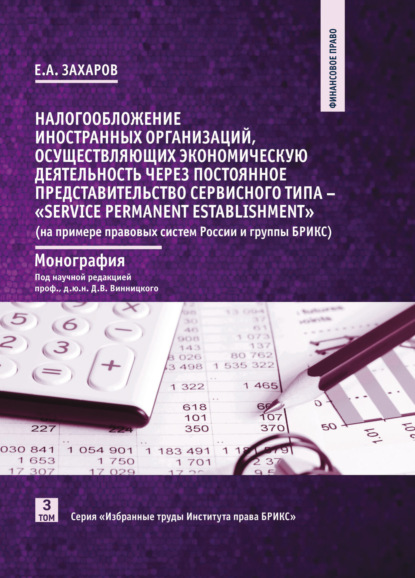
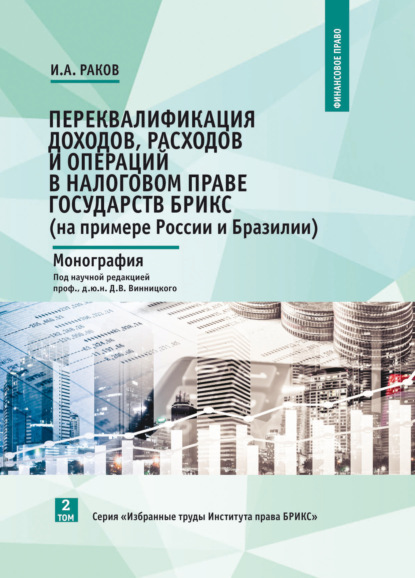
— Monographs
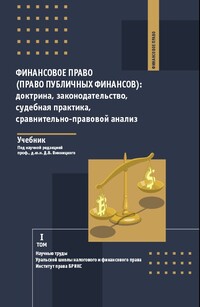
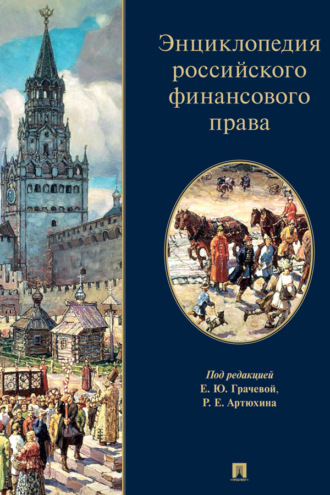
— Textbooks & collective works

— FAQ

Frequently asked questions

Practical questions that come up most often when dealing with the tax authorities. These are short pointers to start with; we maintain a broader base of analyses separately. Don't see your question — write to us and we'll answer personally.

When should I engage a Russian tax attorney?

The earlier the better. The optimal moment is upon receiving the first request or notification from the Russian Federal Tax Service (FTS). At this stage we can build a position and prevent escalation to a field audit. If an audit is already under way, we join at any stage: objections, administrative appeal, arbitrazh proceedings, the Supreme Court. In criminal cases under Articles 198–199 of the Russian Criminal Code, engaging defense counsel is mandatory from the first interrogation.

Can the firm work with clients remotely?

Yes. We support clients across Russia: documents are exchanged via secure channels; communication via video conference or messengers as chosen by the client.

What should I do if the FTS sends a request for explanations?

Do not ignore it and do not respond without analysis. The request is an evidence-gathering tool: response wording may be used against the company. We analyse the basis of the request, prepare a legally precise response and conduct an internal diagnostic.

Is the inspectorate obliged to notify the taxpayer of errors before issuing a decision?

Yes. Upon detection of errors, the inspectorate must notify the taxpayer and request explanations. If the decision is issued without fulfilling this obligation, this is grounds for cancellation. The argument about violation of Clause 3 Art. 88 of the Russian Tax Code must be raised in the administrative appeal to the regional FTS office.

What actions are prohibited during suspension of a field audit?

Prohibited: requesting documents from the taxpayer, any actions on its premises, and interrogation of its employees. The inspectorate must return original documents. Records of employee interrogations conducted during suspension are inadmissible evidence.

What is a CFC and is reporting required?

A Controlled Foreign Company is any foreign legal entity or unincorporated structure in which a Russian tax resident holds more than 25 percent (or 10 percent where aggregate Russian-resident ownership exceeds 50 percent). Participation must be reported to the FTS, annual statements filed and tax paid on undistributed profit — or the fixed-profit regime used. We determine whether a structure falls under the CFC rules, calculate profit and prepare reporting.

— First step

Initial assessment of your dispute prospects

Describe your situation — within 3 business days we will provide a written assessment of prospects and an action plan, without obligation for either side. Call, email or complete the form — at our first meeting, after analysing the situation, we will provide a transparent fee estimate broken down by stages.

Yekaterinburg
Office
101 Mamina-Sibiryaka St., office 8.09
620075, Yekaterinburg
Managing partner · Telegram
Office hours
Mon–Fri · 09:00–19:00
Telegram replies within 1–2 hours during business hours

Consultation request

We respond within one business day. Information from your request is protected by attorney-client privilege (Article 8 of Russian Federal Law 63-FZ).